
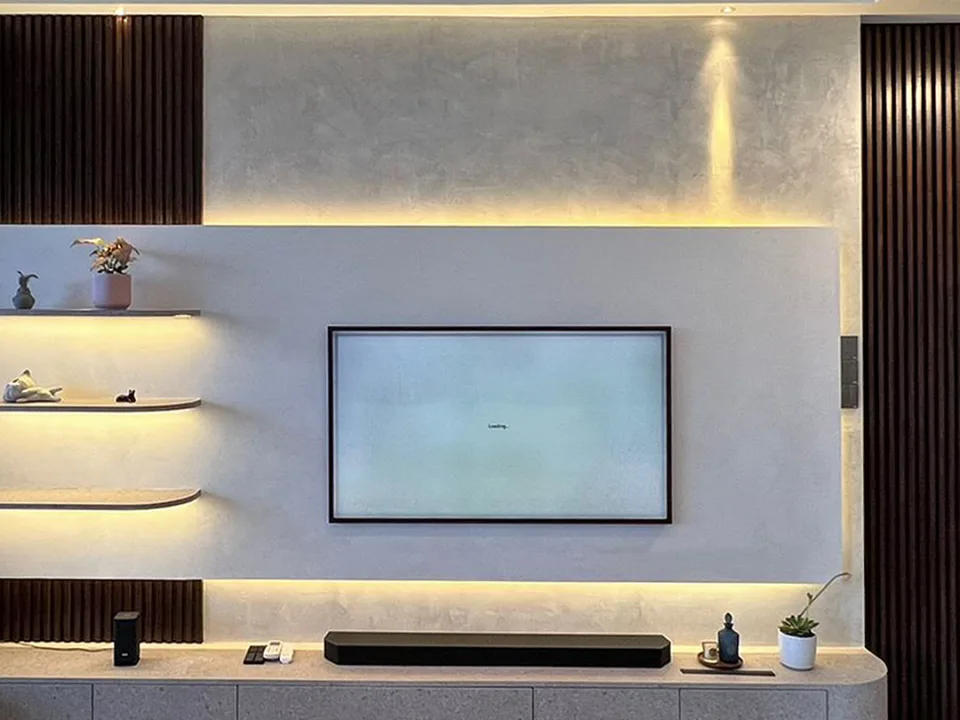
What is Venetian-style plaster?
The term is used for decorative plaster finishes with layered, often polished mineral character. Lime and marble-based traditions inform the appearance, while current formulations and application systems vary by manufacturer.
How the appearance is created
Thin, controlled layers and trowel movement build variation. Appropriate finishing can produce a softer sheen or a more polished, marble-inspired effect. A hand-applied wall has its own movement; a photograph alone cannot define the result.
Matte and polished directions
Within MacoAvell’s range, compare matte Vellplas with polished Vellma and more textured Vellcco effects. Review their samples alongside timber, stone, metal and the intended lighting rather than treating all lime finishes as visually identical.
Where to consider it
Feature walls, lobbies, dining spaces, bedrooms and commercial interiors offer different design opportunities. Confirm substrate, exposure and cleaning needs for each location. A product suitable for one wall is not automatically suitable for a shower or an exposed façade.
Practical limits
Decorative plaster does not repair active cracks or water ingress. Wax is not a substitute for a waterproofing system. Product-specific evidence is needed for claims about VOCs, mould resistance, humidity control and service life.
From sample to completed wall
Agree the colour, sheen, amount of movement and final treatment. Ask the applicator to assess the wall and follow current preparation, drying and finishing instructions. Keep the approved sample and care information for handover.
A traditional reference, a current specification
Historical inspiration can explain the visual language, but it does not establish the performance of a modern product. Specify and maintain the selected finish according to its current product guidance.