
MACOAVELL JOURNAL · HOME DESIGN GUIDE
Texture Paint for Hallways in Malaysia
Texture paint can give a hallway character without filling it with furniture. Start with the wall least exposed to bags, shoes and moving furniture, then choose the amount of relief, colour movement and finishing treatment on a physical sample. For a narrow passage, a restrained texture is a useful starting point; a stronger finish can work on a clearly defined focal wall.
2 November 2026 · By MacoAvell
Plan around the way you enter the home
A hallway has a practical job before it has a decorative one. In a Malaysian terrace house, it may connect the front door, shoe cabinet and living room. In a condominium, the entrance passage may also contain utility doors and storage. Look at those everyday movements before choosing a feature wall.
Walk the route while carrying the things you normally bring home. Note where bags brush the wall, where shoes are removed and where cabinet doors swing. A wall beside a generous landing has a different exposure from the narrow gap behind a bench. Use this simple review to decide where decorative plaster belongs.
Choose one clear focal surface
Stand at the entrance and look towards the next room. A complete end wall, a recessed panel or the surface above a console can provide a natural focus. Mark the boundaries on a photograph before asking for a quotation.
For a busy entrance with several doors, consider keeping the surrounding surfaces quieter. You do not need a different texture between every opening. If the hallway connects to a living-room feature wall, compare both finishes together so the transition feels deliberate.
Do not let decorative additions obstruct the passage or interfere with door operation. Keep access panels usable and agree how the finish terminates around their edges.
Compare cloudy movement with physical relief
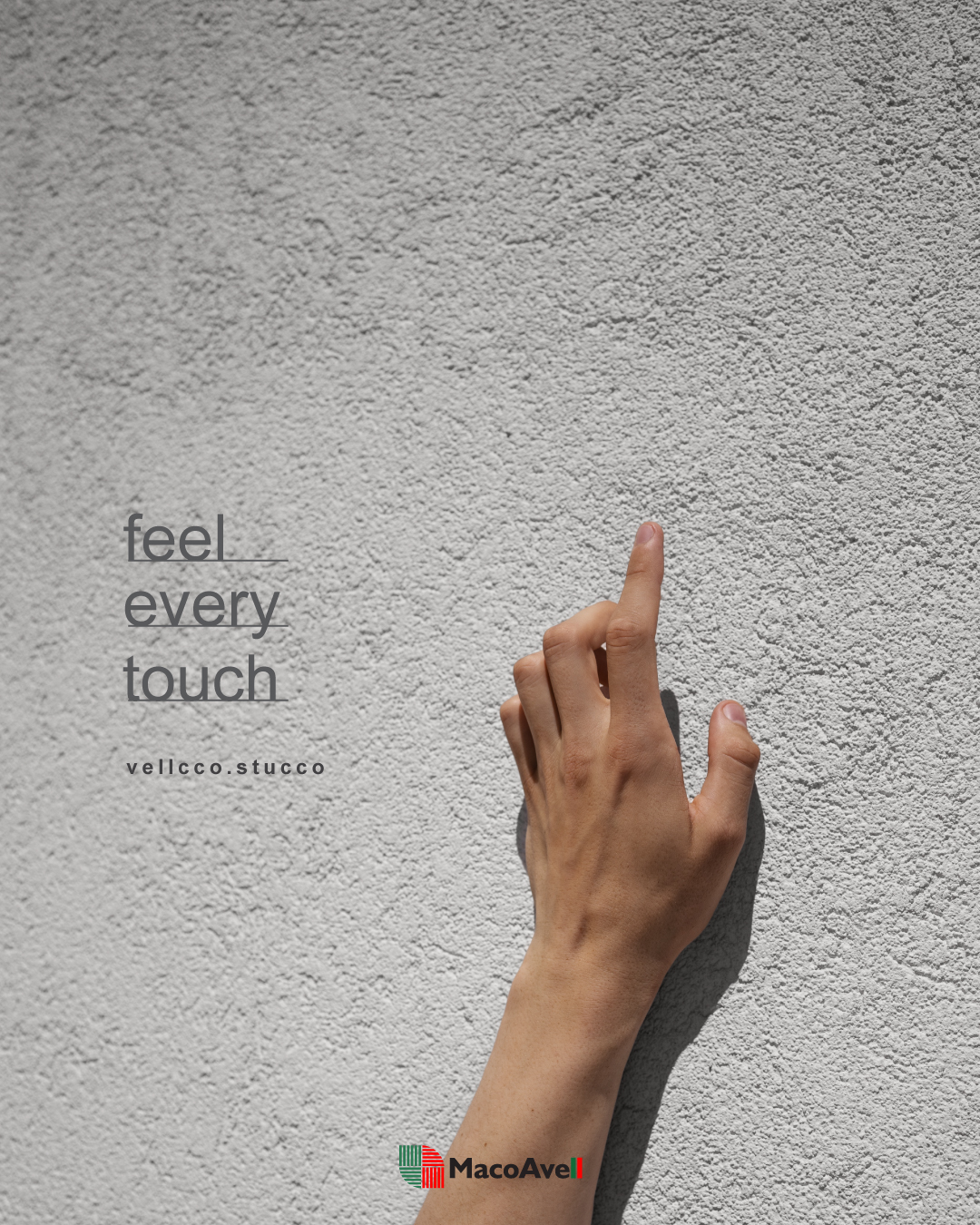
Vellplas Matte Marmorino offers a soft, cloudy matte direction. It is a starting point when you want visual movement without making strongly raised texture the main event. Vellcco Decorative Stucco offers more tactile relief and stone-inspired effects.
Compare samples at the distance from which you will normally see the wall. In a narrow corridor, you experience the surface close up as you pass. Inspect the sample from the side as well as straight on, and consider whether the proposed relief suits that position.
These are appearance choices, not a ranking of impact resistance or washability. Ask MacoAvell to confirm the complete system for the actual wall and expected use before deciding.
Choose colour with the adjoining rooms
Bring the flooring, door and shoe-cabinet finishes into the comparison. A warm neutral may connect timber and pale tiles; a deeper colour may create a more enclosed, expressive entrance. Neither approach is automatically correct for every small hallway.
Little Greene’s hallway guidance also treats the relationship with adjoining rooms and testing colour in place as central decisions. Its paint specifications belong to its own products; here the useful lesson is to judge the whole route through the home.
View the sample in daytime and with your evening lights. If the entrance receives little daylight, give the lighting you actually use most weight. Avoid choosing from a bright showroom photograph alone.
Check the lighting before approving the texture
Light travelling across a wall can make its relief much more noticeable. Place the sample near the intended fitting position and look from the front door, the living room and beside the cabinet. Check whether the wall feels comfortably varied or visually busier than you expected.
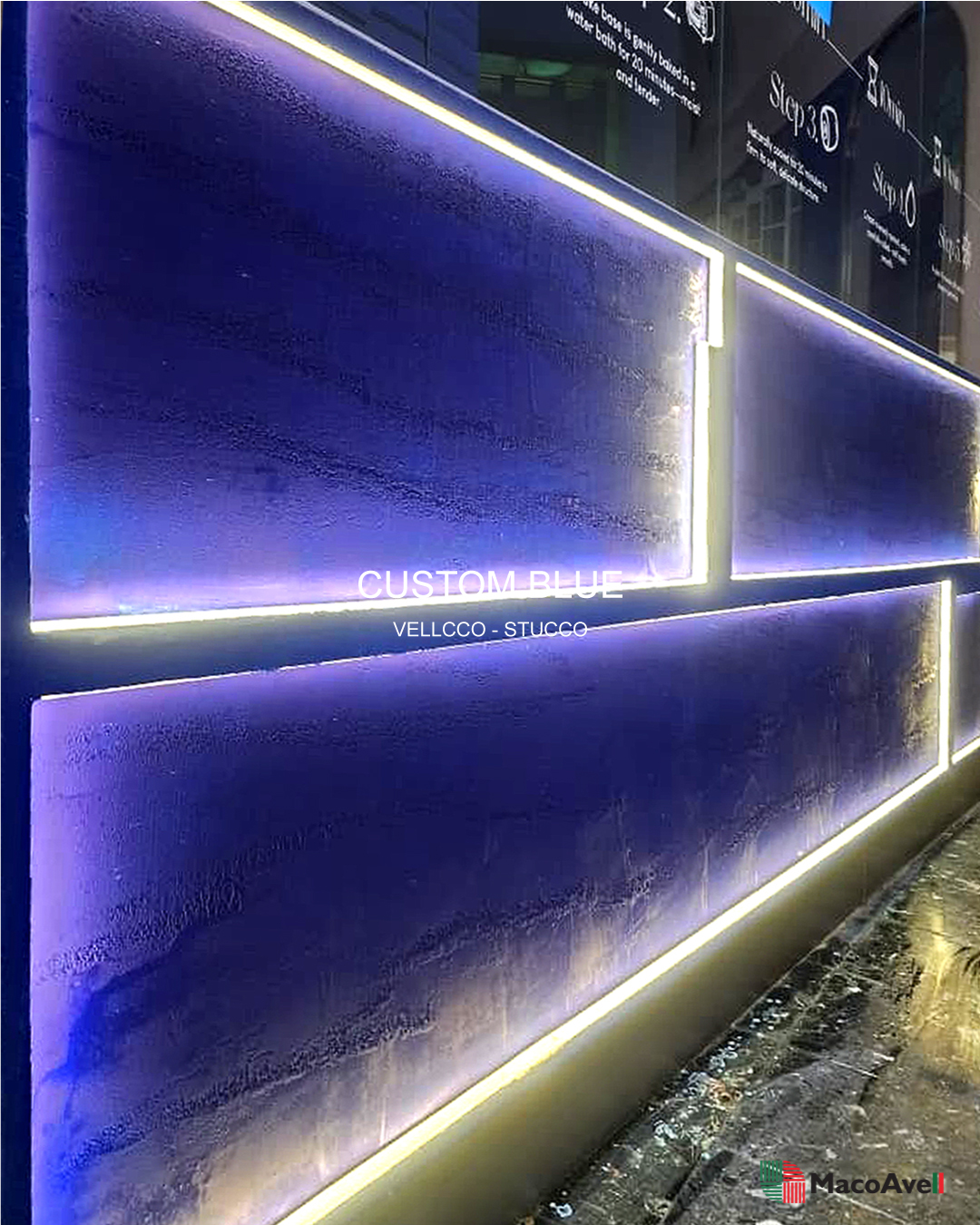
A framed panel with perimeter lighting creates a different effect from an uninterrupted wall under a ceiling light. The custom-blue Vellcco reference below illustrates that distinction. It is a finish and lighting example, not a claim that the photographed installation is a residential hallway.
Confirm fitting positions and wiring before decorative work starts. A later cable chase or relocated light can leave an area requiring coordinated repair.
Design for contact and agree the care routine
Keep umbrella storage, shoe-cleaning areas and frequently handled objects away from the decorative surface where practical. Position a bench so it does not repeatedly rub the wall. At exposed corners, discuss a suitable detail with the designer and applicator instead of expecting texture to prevent damage.
Ask for care instructions for the exact finish and final treatment. Earthaus’s plaster-care guidance demonstrates why this matters: its cleaning advice varies between sealed and unsealed finishes. Those instructions do not establish a cleaning method for MacoAvell products.
Keep the approved sample and product references. Before trying a cleaner or stain-removal method, confirm compatibility with the supplier. If damage occurs, send photographs and ask whether a local repair or a larger refinishing area is appropriate; an invisible touch-up should not be assumed.
Make the quotation cover the real hallway
Give the applicator wall dimensions and photographs showing doors, corners, cabinets and existing damage. Identify any areas that are difficult to reach or that must remain accessible during the work. Discuss protection of flooring, joinery and the route through the home.
Ask the quotation to identify preparation, the decorative finish, any final treatment and sample approval. Resolve leaks, loose surfaces or recurring cracks before decoration. Obtain current instructions through MacoAvell’s resources and product documents; a general design guide cannot approve an unknown background.
Frequently asked questions
Will texture make a narrow hallway look smaller?
There is no universal outcome. Colour, pattern strength, lighting and the extent of the finish all contribute. Compare a restrained sample and a stronger one in the passage before committing.
Should every hallway wall have the same texture?
Not necessarily. One complete focal surface may be enough. Where several walls are included, agree the transitions around doors and corners rather than stopping the finish arbitrarily.
Is a rougher finish better at resisting scuffs?
Roughness alone does not establish scuff resistance. Explain the expected contact and ask about the proposed system’s suitability, care and repair options.
What should I send for a hallway enquiry?
Share the project location, approximate wall area in sq ft, photographs of the entrance and your preferred texture. Request a sample or discuss your project, or WhatsApp MacoAvell on +60 12-484 7030.