Marble-like movement
A fine decorative finish with flowing, trowel-created pattern.
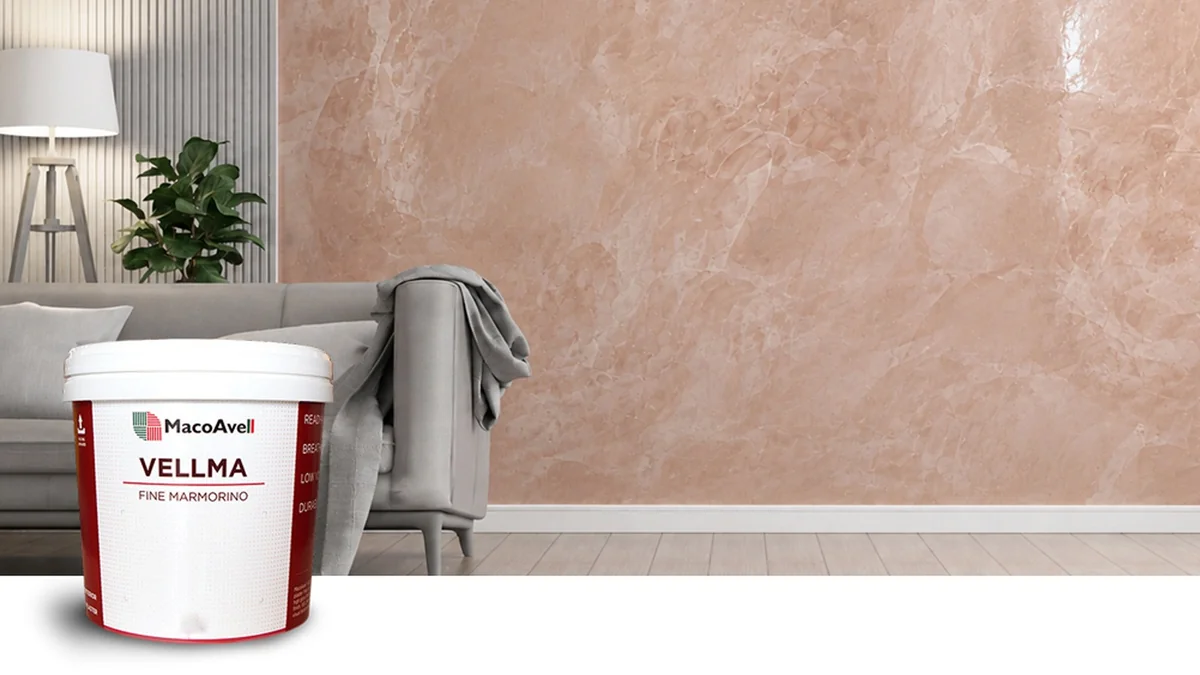
Your supplied product artwork is kept intact. Detail views are crops of the same artwork, not additional completed projects.
01 / The plaster collection
Fine Marmorino
Marble-like movement, hand-worked into a continuous decorative surface. Vellma Fine Marmorino brings pattern, colour and a burnished sheen to interior feature walls.
Colour and finish should be approved on a physical sample.
Safety Data Sheet · MSDS / SDS (PDF)A closer look at Vellma
Vellma is the fine, polished Marmorino direction in the MacoAvell collection. The effect comes from the relationship between a prepared base, thin applied layers and the finishing technique. It is not a printed marble pattern: the applicator gives each surface its own movement.
Choose a restrained, softly blended sample for a quiet interior, or discuss stronger movement for a focal wall. Review it beside your actual flooring, timber and fabrics, in both daylight and the planned evening lighting.
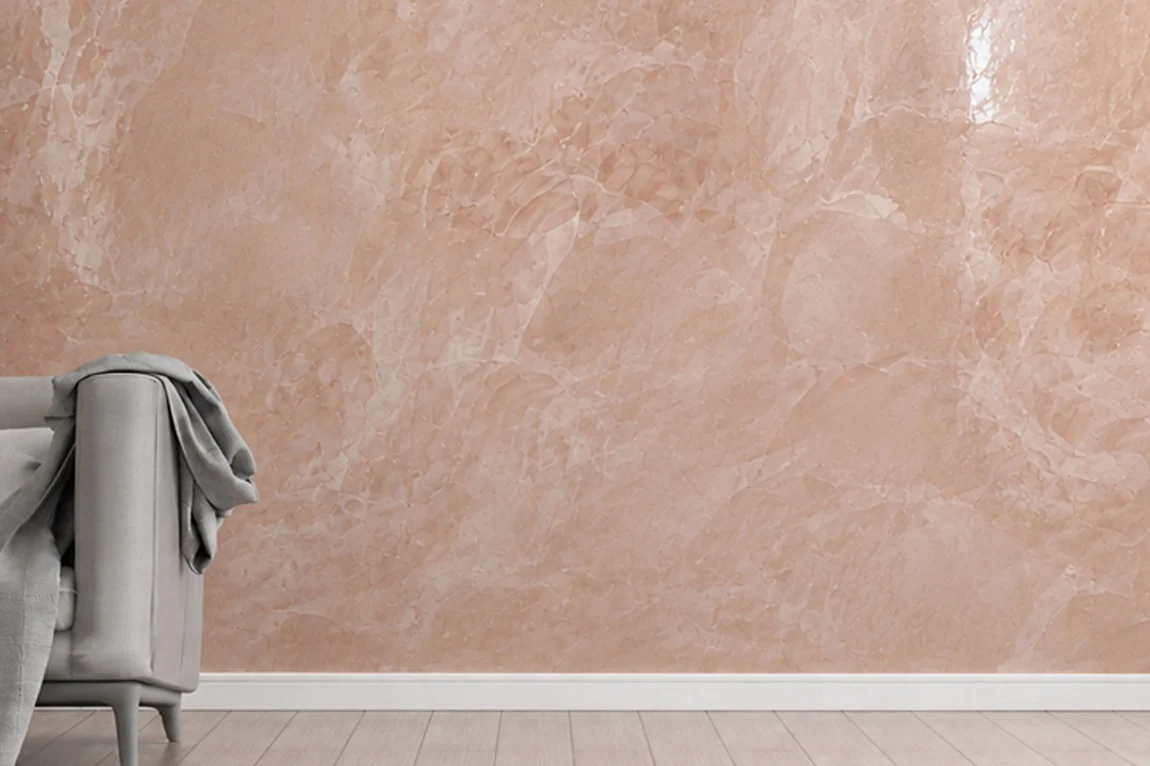 Detail from your supplied artwork
Why choose this finish
A useful starting point for choosing the right surface—not just the right colour.
A fine decorative finish with flowing, trowel-created pattern.
Burnishing changes how the surface catches and reflects light.
Stir the product before use; follow the current application specification.
Breathability is described in the existing product information.
Ask for current test documentation for your project specification.
The applicator’s technique shapes the movement and final appearance.
Low-VOC and breathable descriptions follow the existing product information; no numerical emission result or certification is claimed on this website.
Material, texture and context
Explore the surface at room scale and up close. Texture and lighting shape the final appearance.

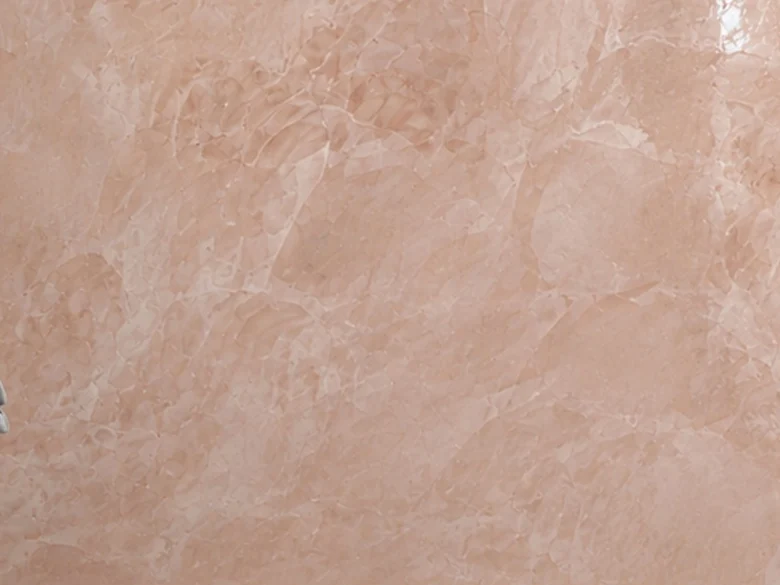 Surface detail
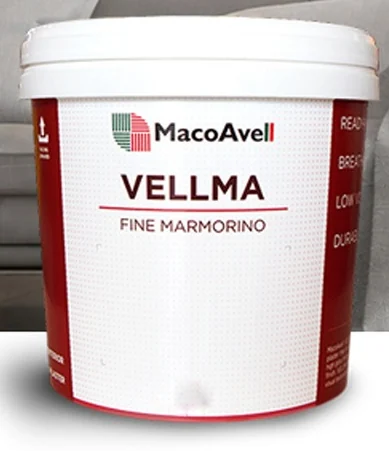 Your product artwork
Use the finish as a focal surface behind a sofa, headboard or reception desk.
Bring continuity to an approved curved wall, archway or column.
Review the sheen with the lighting and viewing angles intended for the room.
Photographed finish · not a colour chartColour & finish selection
With Vellma, the amount of movement and burnishing matters as much as the chosen shade. Take a sample into the room and compare it beside flooring, timber and fabrics. Agree the final sheen before the main wall is started.
Use the current MacoAvell colour chart as the starting point.
Decide whether you prefer quieter shading or more visible trowel movement.
View the sample in daylight and under the planned artificial lighting.
From preparation to finish
A readable overview of the existing application guidance. Use the current approved TDS and a representative sample before site work.
Tools to discuss
Clean and dry the surface. Remove loose coatings and wallpaper, repair defects, dull glossy areas and confirm the primer. Stir the plaster before use. Resolve dampness and active cracking before decorative work; a decorative finish does not repair moving cracks.
Use a round-edge steel trowel. Spread a thin layer, remove excess at about a 30° angle and smooth. The product page states 8 hours before the next coat; the FAQ states 24 hours. Confirm the current schedule. Avoid unapproved thinning and heavy build-up.
Use overlapping long and short strokes for the next thin coat. Fill voids and remove high spots. The published burnishing window is approximately 15–30 minutes; check actual readiness and avoid overworking.
The existing page specifies at least 24 hours before the finishing treatment. Apply a compatible Vellwax treatment only as specified and buff evenly after the required drying period. Wax can change colour and sheen and does not make the wall waterproof.
For specifying and planning
Keep packaging, yield, application and the complete finish system together when planning your project.
| Available pack | 25 kg — confirmed by MacoAvell |
|---|---|
| Finish direction | Fine, polished Marmorino. Approve the colour, pattern and sheen on a physical sample. |
| Published coverage basis | 60–80 sq ft per 5 kg on a smooth wall |
| 25 kg planning equivalent | Approximately 300–400 sq ft, by proportional calculation only |
| Coverage limits | Roughness, texture, application thickness and wastage change consumption. The source does not clearly define the coat basis. |
| Recoat timing | Product page: 8 hours. General FAQ: 24 hours. Current product-specific TDS must resolve this. |
| Before finishing wax | At least 24 hours in the published product-page guidance |
| Application temperature | Published range: 10–32°C for both air and surface |
| Thinning | Not generally recommended. The existing page gives a special-effect limit of 29.6 mL water per 5 kg; confirm before using it. |
| Exposure | Interior. The existing FAQ does not recommend direct shower exposure. |
| Storage | The general FAQ refers to up to 2 years unopened, kept cool, dry and away from frost and heat; confirm the current batch label. |
Retained from the existing page: clean and dry the surface, remove wallpaper and loose or peeling paint, repair defects, spot-prime where appropriate and dull glossy coatings.
The older acoustic-tile guidance says to remove embedded dust, avoid blocking perforations, and trial adhesion on vinyl-coated tiles. It also suggests no primer to preserve acoustic performance. That is a special-case statement—not a blanket instruction for every substrate. Obtain system and substrate approval.
The original page warns that water-based plaster can loosen or deteriorate blown-on soft-fibred ceiling finishes. Do not proceed on an unknown ceiling surface from a visual guess or a generic decorative-paint instruction.
The source pages include low-VOC, low-odour, durability, breathability and, on some pages, 0% VOC, formaldehyde-free, anti-fungal and anti-bacterial wording. Numerical, health and antimicrobial claims need current evidence before promotional use. The new page does not convert those source statements into certification badges or universal safety guarantees.
Confirm the current approved technical data sheet, pack size and application method with MacoAvell before specification or use.
Before you choose
Answers specific to Vellma, its finish and the way it is selected.
Vellma is the fine, polished Marmorino direction; Vellplas is the softer, matte and cloudy direction. Compare actual samples rather than selecting only from screen images.
The existing FAQ points to surface flatness, burnishing timing and the right rounded trowel. A properly approved finishing wax may also change the sheen. Review a trial panel before correcting a whole wall.
The existing FAQ includes archways and columns. The underlying surface still needs to be suitable, stable and correctly prepared; confirm the complete system for the location.
No. The existing FAQ distinguishes water resistance from waterproofing. A decorative finish with wax is not a substitute for a waterproofing system.
The existing FAQ notes that Vellma needs more burnishing skill than Vellplas or Vellcco. A training session or experienced applicator is a better starting point for a consistent polished result.
No exact match should be assumed. Lighting, screen settings, application and finishing treatments affect the appearance. Approve a physical sample.
Send the project location, approximate wall area in sq ft, substrate condition, desired colour and finish, and your timeline. Photographs are helpful but optional.
Make it work for your project
Share the approximate wall area, location and project type. We can then discuss Vellma, samples and the preparation needed for your wall.
Project photographs are optional. Contact MacoAvell for the wider project enquiry route.
Compare the collection