
MACOAVELL JOURNAL · DINING ROOM GUIDE
Texture Paint for Dining Rooms in Malaysia
Texture paint can suit a dining room when the chosen wall, decorative finish and care requirements fit everyday use. Start with a dry wall away from direct cooking splashes, check where chairs and hands will touch it, then compare physical samples beside your dining furniture. For Malaysian homes with connected living, dining and kitchen spaces, these practical decisions matter as much as the colour.
9 November 2026 · By MacoAvell
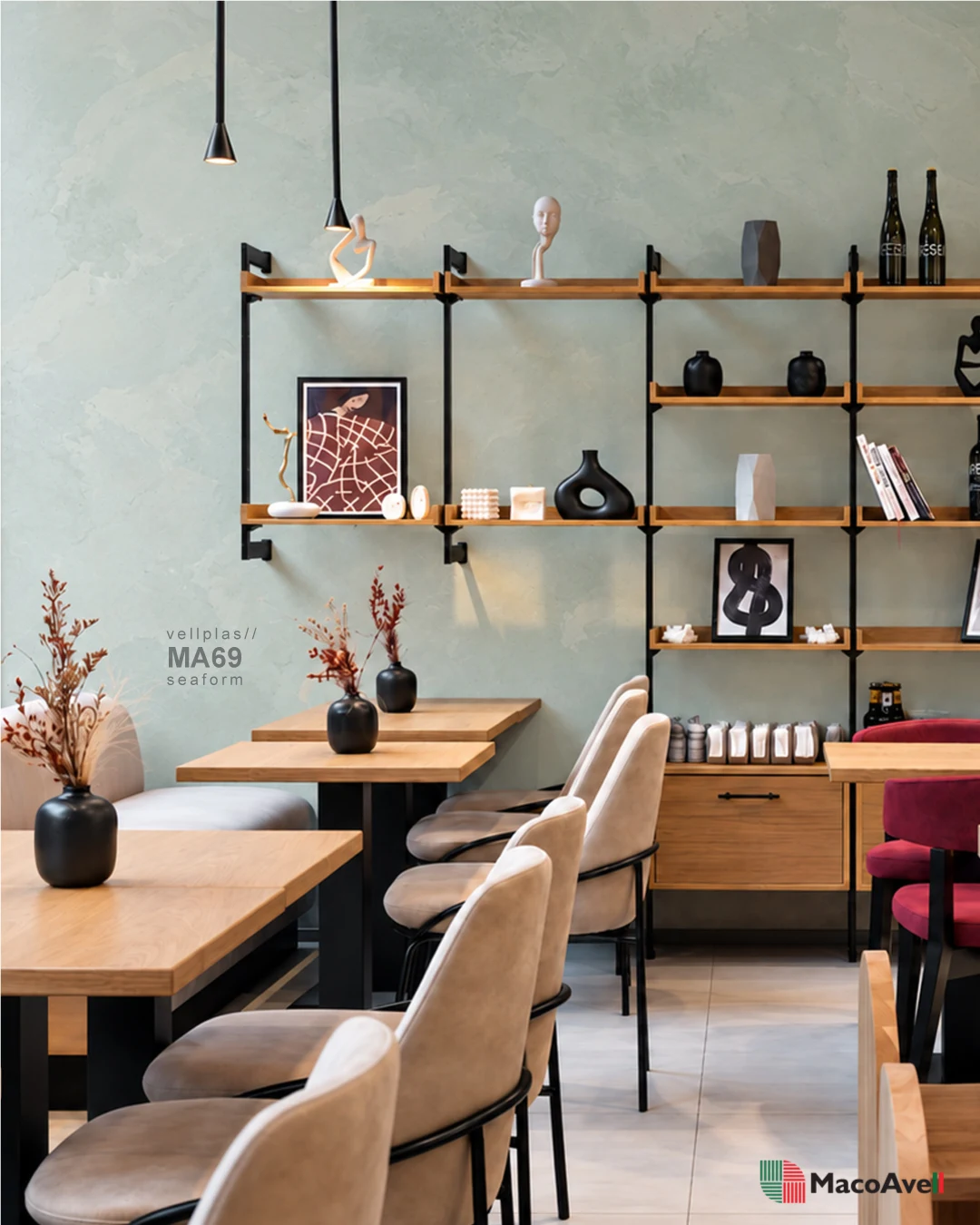
Choose the wall around the table, not an empty-room photograph
Set out the table, chairs and sideboard before deciding where the texture belongs. Pull the chairs back as someone would when standing up. Check whether their backs touch the wall, whether diners brush past it and where a child’s high chair is likely to sit. A wall that looks ideal in an empty room may be the busiest surface once the furniture arrives.
A wall behind a sideboard can provide a useful focal point with less direct chair contact. Behind a dining bench, consider a separate backrest or another suitable protective detail. Neither arrangement guarantees freedom from marks; it simply lets you design around the contact you can already predict.
In an open-plan condo, relate the feature to the dining zone. A corner, recess or joinery edge can provide a deliberate stopping point. Avoid ending the finish at an arbitrary line merely because the table currently sits there.
Compare three finish directions
Choose the surface character first, then narrow the colour. MacoAvell’s live product collection offers three different starting points:
- Vellplas Matte Marmorino has soft, cloudy movement and a matte direction. Consider it when the table, pendant or artwork should remain the main focus.
- Vellcco Decorative Stucco offers more tactile relief and stone-inspired effects. Review the texture at seated distance as well as from the entrance.
- Vellma Polished Marmorino creates marble-like movement with a burnished sheen. Check how the chosen sample reflects the dining lights.
These are appearance choices, not a ranking of stain resistance. Ask about the complete proposed system, including any final treatment, before deciding which suits your household. A cloudy decorative plaster should not automatically be described as limewash: product composition and application differ.
Treat the dining wall and kitchen splash zone separately
In a terrace house or apartment, the dining table may be only a short distance from the kitchen. Look at what actually reaches the wall: water from a sink, oil from cooking, steam from appliances or frequent wiping around a drinks station. The label “dry kitchen” does not establish the exposure.
Keep direct splash areas as a separate material decision. Ask the supplier to confirm suitability for the exact location and cleaning routine; a decorative finish or wax should not be assumed waterproof, grease-proof or suitable behind a hob. If evidence is unavailable, place the texture on another wall and choose a finish intended for that exposure.
Have damp patches, loose paint or recurring stains assessed before decorating. Covering the symptom with texture does not resolve its cause.
Borrow the balance from a real dining interior
The two photographs here show a café interior featured on MacoAvell’s Instagram. The original caption identifies Vellplas MA69 Seaform; it does not name the location. The green wall, timber tables and shelving, pale chairs and darker accents offer a useful reference for a home dining area.
Take the relationship between the materials, rather than copying every object. A strongly veined tabletop may work best with quieter wall movement. If the table and chairs are simple, a more expressive surface can carry the scheme. The dedicated Seaform café interior article explores that particular palette in more detail.
The photographs establish the visible finish and arrangement. They do not establish the coating build-up, cleaning performance or suitability for your kitchen-adjacent wall.
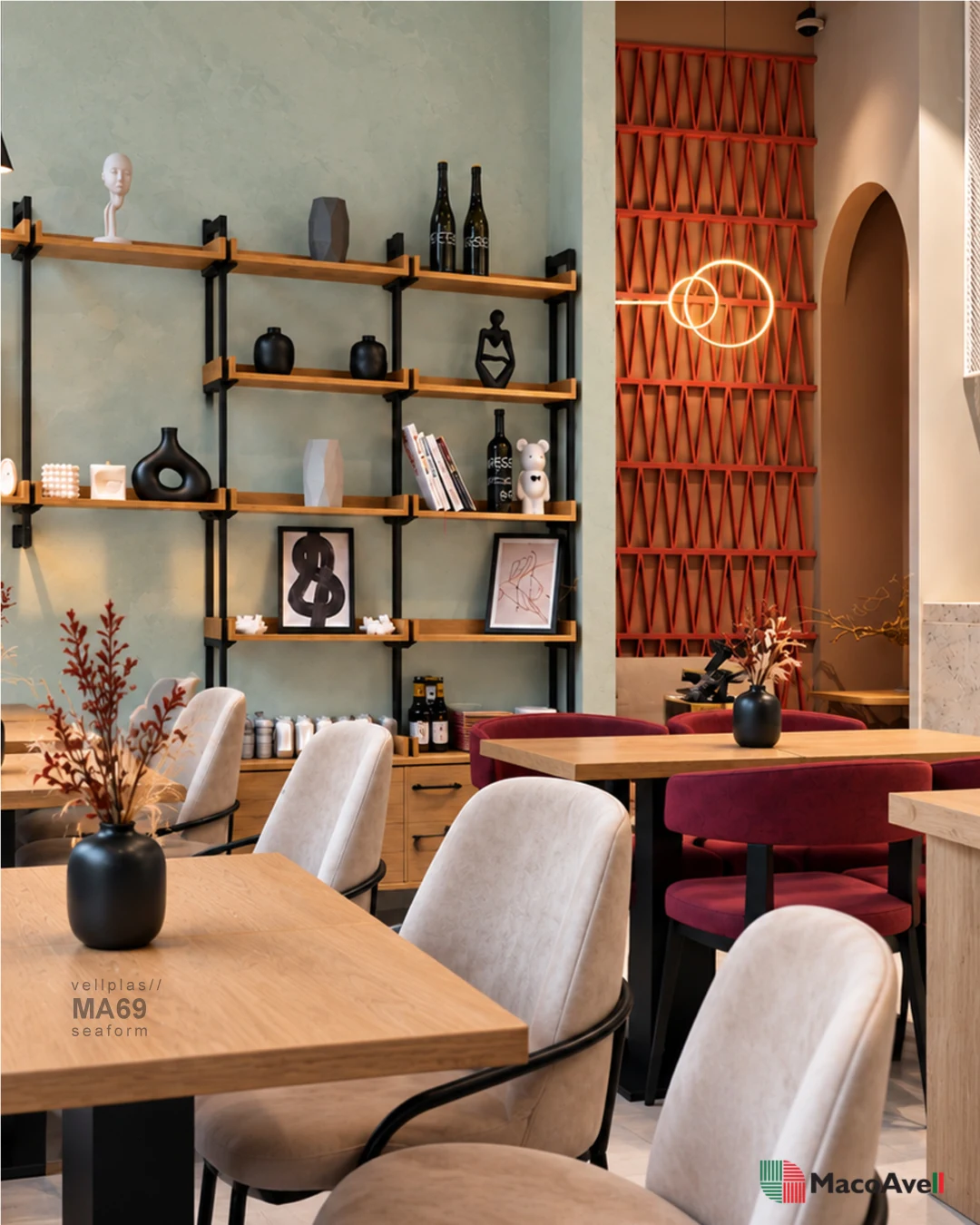
Check the sample from a seated position
Place your shortlisted sample beside the tabletop, chair fabric and flooring. View it during daylight and with the lights you use at dinner. A pendant over the table and a light directed across the wall can produce different impressions of the same texture.
Sit down to assess it. Strong patterning near eye level may feel quite different from a photograph taken from the doorway. Include any proposed final treatment in the sample, since the finished appearance is what you are choosing. Agree the amount of movement and sheen alongside the colour reference.
Discuss care and cost before booking installation
Ask for written care advice for the selected finish. Confirm when routine cleaning may begin, which method and products are permitted, and how to handle a food mark. Avoid assuming that instructions for ordinary washable paint also apply to decorative plaster. Do not experiment with abrasive pads or strong cleaners on the feature wall.
Request an itemised quotation covering the wall area, assessment and preparation, decorative application, proposed final treatment, protection of furniture and floors, and any work around shelves or sockets. An occupied dining room may need different access and protection arrangements from an empty renovation site.
Discuss repair expectations too. Ask how a damaged patch would be assessed and whether a local repair could remain visible. Keep the product, colour and approved sample references for future enquiries.
Frequently asked questions
Is texture paint suitable behind a dining table?
It can be, provided the selected system suits the exposure and care routine. Check chair contact, food splashes and the existing wall condition before choosing the finish.
Should a small dining room have one textured wall or several?
Start with one well-positioned wall and assess the room as a whole. More coverage is a design choice, not a requirement. Furniture, openings and sightlines should guide the decision.
Can I wipe a textured dining wall after every meal?
Only follow the cleaning method approved for the installed system. If frequent wiping is essential, make that requirement clear before selecting the product and final treatment.
Will a protective finish make decorative plaster suitable for a splashback?
Do not assume so. Obtain product-specific confirmation for the complete system and actual heat, water, grease and cleaning exposure.
Plan your dining wall
To discuss a suitable sample, send MacoAvell a sample or project enquiry with a room photograph, approximate wall area in sq ft, project location and preferred finish. Mention nearby cooking or washing areas and any chair contact. You can also WhatsApp +60 12-484 7030.