
MACOAVELL JOURNAL · SITE COORDINATION
Protecting Decorative Plaster During Fit-Out in Malaysia
Protect decorative plaster during fit-out by controlling work around the finished wall, agreeing suitable temporary protection and recording its condition before other trades return. If damage occurs, assess the cause and proposed repair before attempting a touch-up. For Malaysian main contractors, architects and interior designers, this helps preserve the approved finish through the busy period between application and client handover.
13 November 2026 · By MacoAvell
Plan the remaining work before releasing the wall
A hotel reception, retail unit or residential show unit may still need lighting adjustments, shelving, signage and furniture deliveries after its decorative wall is finished. Put those activities on the programme before deciding when the applicator should complete each area.
Identify tasks that create dust, require drilling or bring equipment close to the surface. Where practical, settle fixing positions and complete disruptive work first. Where later access is unavoidable, agree the access route, working method and protection with the relevant trade.
Release completed areas in manageable sections. A room marked “finished” should have a named person coordinating subsequent entry, rather than remaining an informal storage space for ladders, cartons and tools.
Match protection to the actual finish
Vellplas Matte Marmorino offers a soft, cloudy matte direction, while Vellcco Decorative Stucco provides more tactile relief and stone-inspired effects. These appearance descriptions do not tell a site team which tape, wrapping or temporary covering is safe to use.
Ask the finish supplier and protection supplier to confirm a suitable method for the installed system and its current condition. Establish whether protection can touch the surface, how it will be supported and when it can be removed. Do not assume that a product labelled “low tack” is approved for every decorative wall.
Consider freestanding barriers where direct contact is unnecessary. Keep them stable and clear of circulation and emergency routes. The protection arrangement should prevent accidental contact without creating a new site hazard.
Allow the specified drying and finishing stages
A surface that looks dry may not yet be ready for covering, cleaning or contact from another trade. Obtain product-specific instructions for the decorative material and any final treatment. Record the relevant readiness conditions in the programme rather than substituting a general overnight waiting period.
Use MacoAvell’s resources and product documents to identify the materials, then request current instructions for the actual proposal. The resource page distinguishes supplied safety documents from technical information requiring revision confirmation.
Agree who checks readiness before protection is installed. If site conditions or the finishing sequence change, refer the decision back to the supplier and responsible project team. A delivery deadline should not silently become permission to cover a fresh finish.
Record condition before other trades return
Use a short area-release record with the wall location, date, finish reference and outstanding work. Take a room view and closer photographs of edges, corners and vulnerable junctions. Record existing marks so that later observations can be compared fairly.
The Painting Contractors Association’s P1 guidance distinguishes workmanship corrections from damage caused by others and from latent conditions. This is a useful way to organise a discussion, not an automatic Malaysian contract term. Responsibilities and costs must follow the project’s agreed documents.
Keep the record accessible to the site supervisor and returning trades. Ask them to report contact or damage promptly, before someone tries an unapproved cleaner or repair that makes the original condition harder to assess.
Use finished-project images for coordination questions
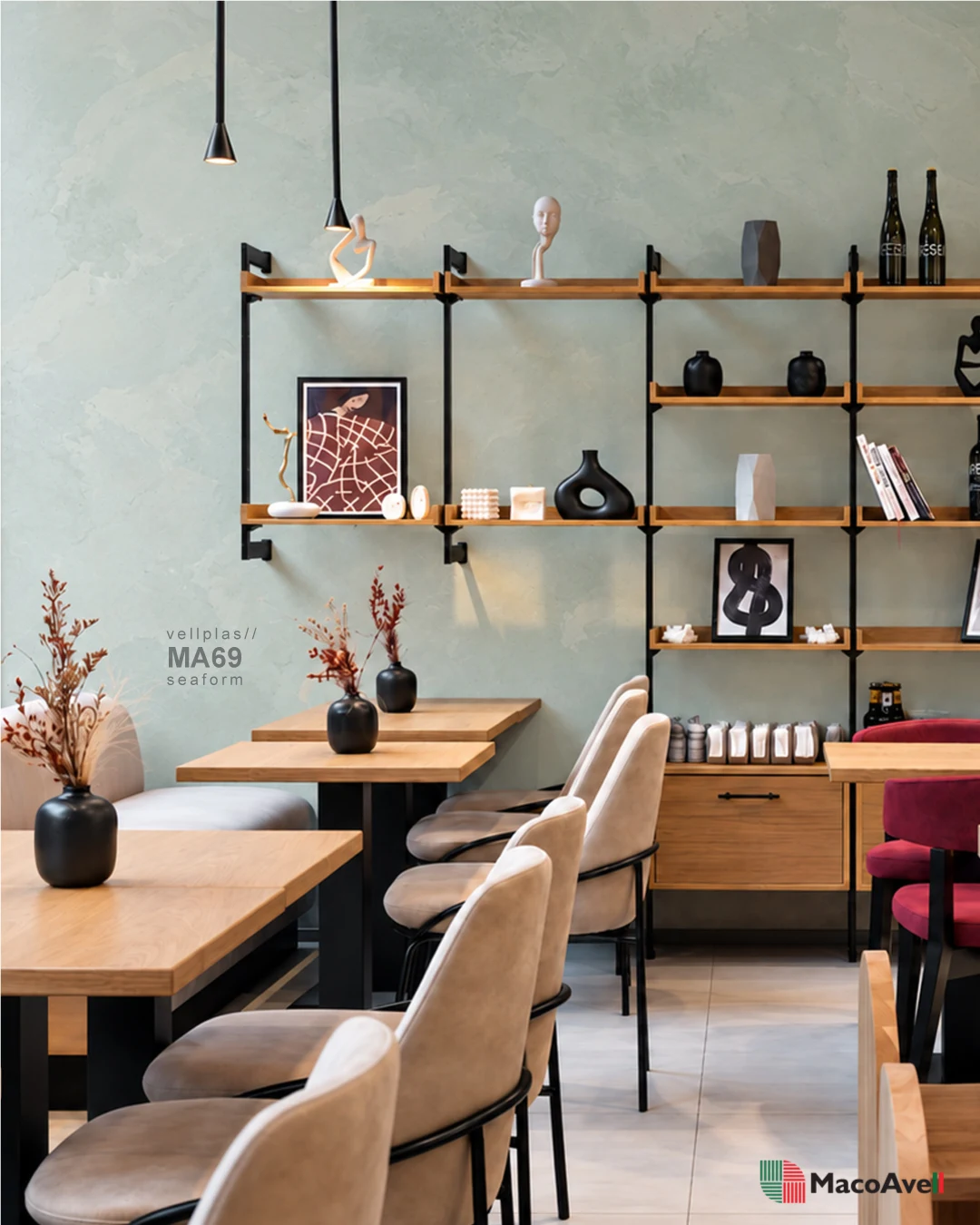
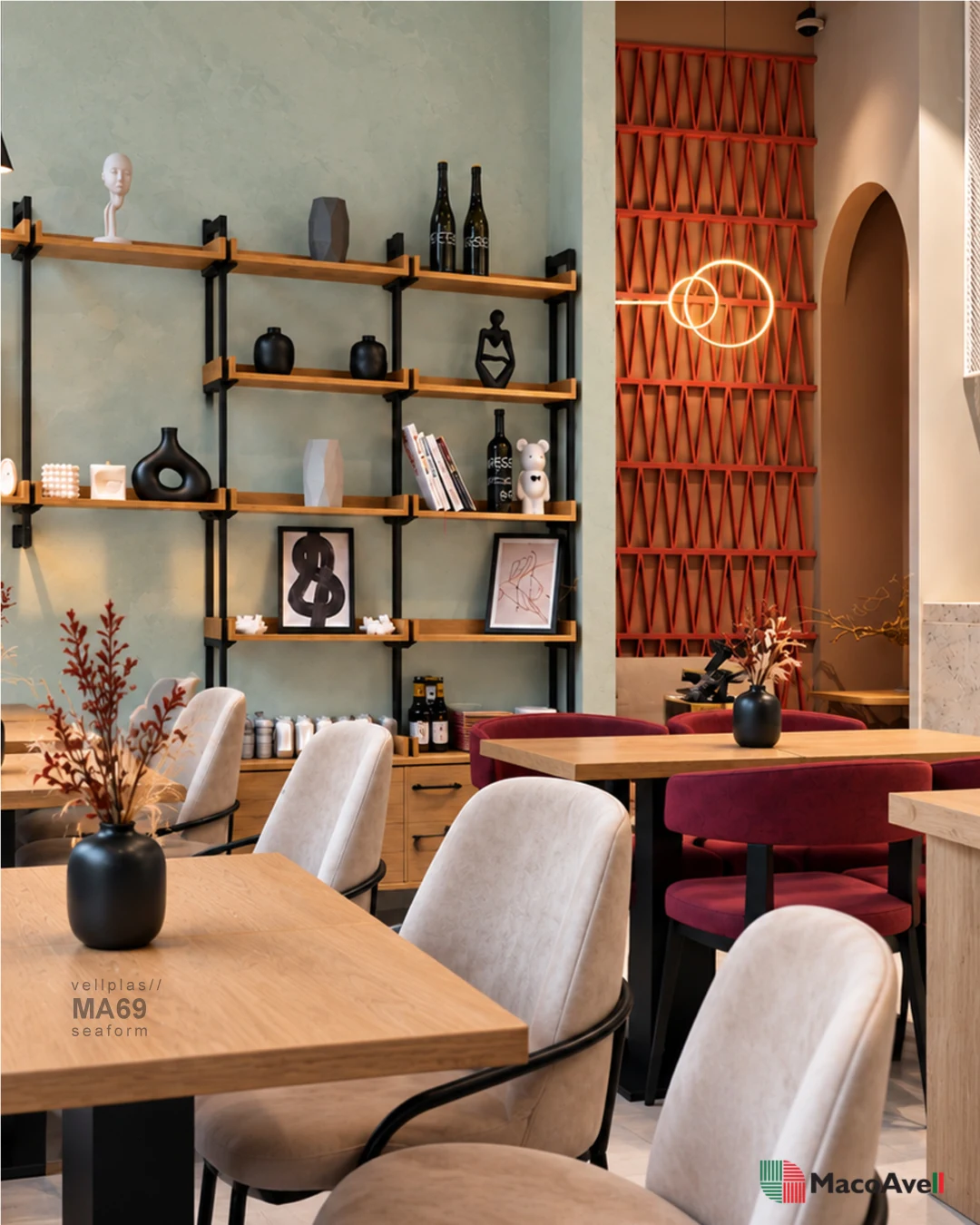
The café photographs here show Vellplas MA69 Seaform, identified in the original MacoAvell Instagram caption. The location is not stated. Shelving, lighting and furniture sit close to the decorative surface, making this a useful visual reference when discussing access and installation sequence.
For your own project, ask how shelf brackets, light fittings and furniture will be installed without unnecessary contact with the wall. These photographs show the finished arrangement; they do not document the protection method used, hidden substrates or any repair history.
Assess damage before promising an invisible repair
Separate a removable surface mark from a chip, scratch, crack or moisture-related change. Photograph the affected area and record when it was noticed. Ask the applicator to assess it before sanding, filling, waxing or repainting. A repair method suitable for ordinary emulsion may alter a decorative finish’s pattern or sheen.
Agree a limited trial where appropriate. Review the result after the required stages are complete, from normal occupied positions and under the intended lighting. Compare colour, relief, movement and sheen, not colour alone.
A local repair may remain visible; a broader treatment may need consideration. Have the applicator explain the options, boundaries and expected appearance before approval. Do not promise that leftover material or an identical colour code will automatically produce an invisible patch.
Close the job with a useful handover pack
Schedule a coordinated inspection after protection has been removed by the agreed method. Give each outstanding item an exact location, photograph, action owner and review date. Distinguish an appearance query from a confirmed defect and keep the assessment tied to the agreed finish reference.
At handover, provide the installed product and colour references, final treatment, relevant document revisions, approved care instructions and the contact for future enquiries. Note any completed repairs and retain photographs of the accepted result.
If spare material is retained, confirm its labelling, storage conditions and usable life with the supplier. Keep the records useful even after the original project team has moved on. This complements the earlier mock-up approval guide, which covers agreeing the finish before installation.
Frequently asked questions
Can protective tape go directly onto textured plaster?
Only use a method confirmed as suitable for the installed finish and its condition. Tape type alone does not establish compatibility. Discuss a trial and removal method before widespread use.
Who pays for damage caused after the wall is completed?
Follow the project’s agreed responsibilities and records. Identify what happened and obtain an agreed repair scope; avoid treating every later mark as the same category of touch-up.
Can every damaged patch be repaired locally?
No universal promise is appropriate. The cause, finish, pattern and repair visibility need assessment. Review a trial before agreeing the extent of work.
What should accompany a protection or repair enquiry?
Send a project enquiry with the location, finish reference, photographs, approximate affected area and remaining site activities. For MacoAvell guidance, WhatsApp +60 12-484 7030.