
MACOAVELL JOURNAL · CUSTOM TEXTURED FINISHES
Istana Negara: Custom Textured Finishes and Architectural Detail
Custom textured finishes can bring depth to an interior while complementing its architecture. At Istana Negara, warm-toned surfaces sit alongside arched openings, carved timber and decorative metalwork. These four project photographs offer a look at the finishes and the application work behind them.
16 October 2026 · By MacoAvell
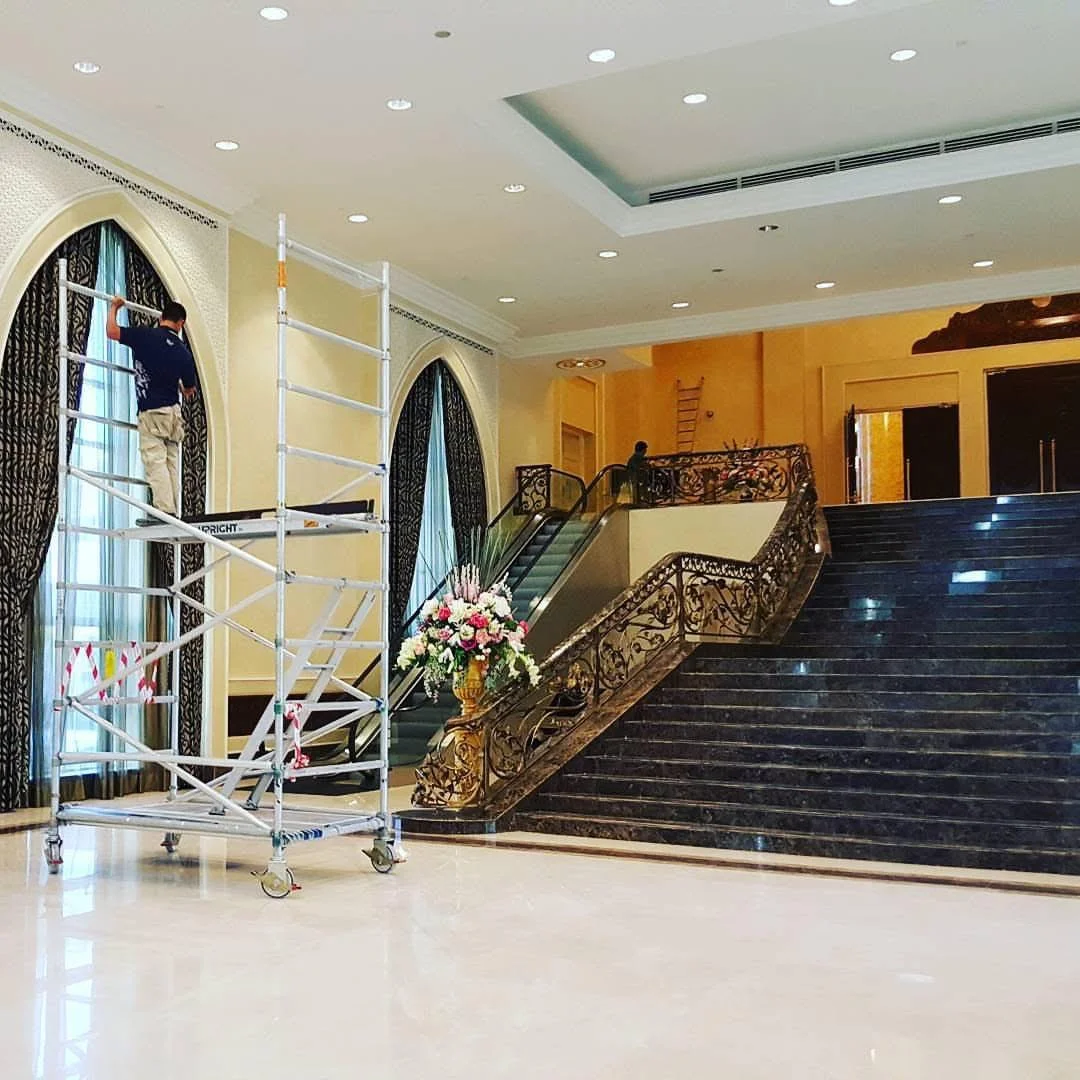
In focus: Istana Negara · Custom textured finishes · Project photographs include work in progress
Begin with the architecture
In the staircase photograph, several elements already command attention: broad dark steps, ornate balustrades, tall arched windows and a high ceiling. The wall finish sits within this composition, connecting the larger surfaces with the room’s finer details.
This is a useful starting point for architects, interior designers and homeowners considering custom texture. Before choosing a pattern, look at the room’s proportions and existing materials. Decide whether the wall should become a focal point or provide a quieter setting for other details. A finish that looks striking on a small sample may have a different presence across a large wall.
Choose texture at the scale of the room
The photographs include broad wall areas as well as smaller bands and sections around decorative panels. These surfaces are viewed from different distances, so texture needs to be considered both across the room and close to the wall.
For a large surface, consider how repeated marks or tonal variation will read as a whole. Around mouldings and carved details, pay attention to how the finish meets each edge. Review both views: step back to assess the overall effect, then move closer to examine the surface and its transitions.
Review colour together with lighting
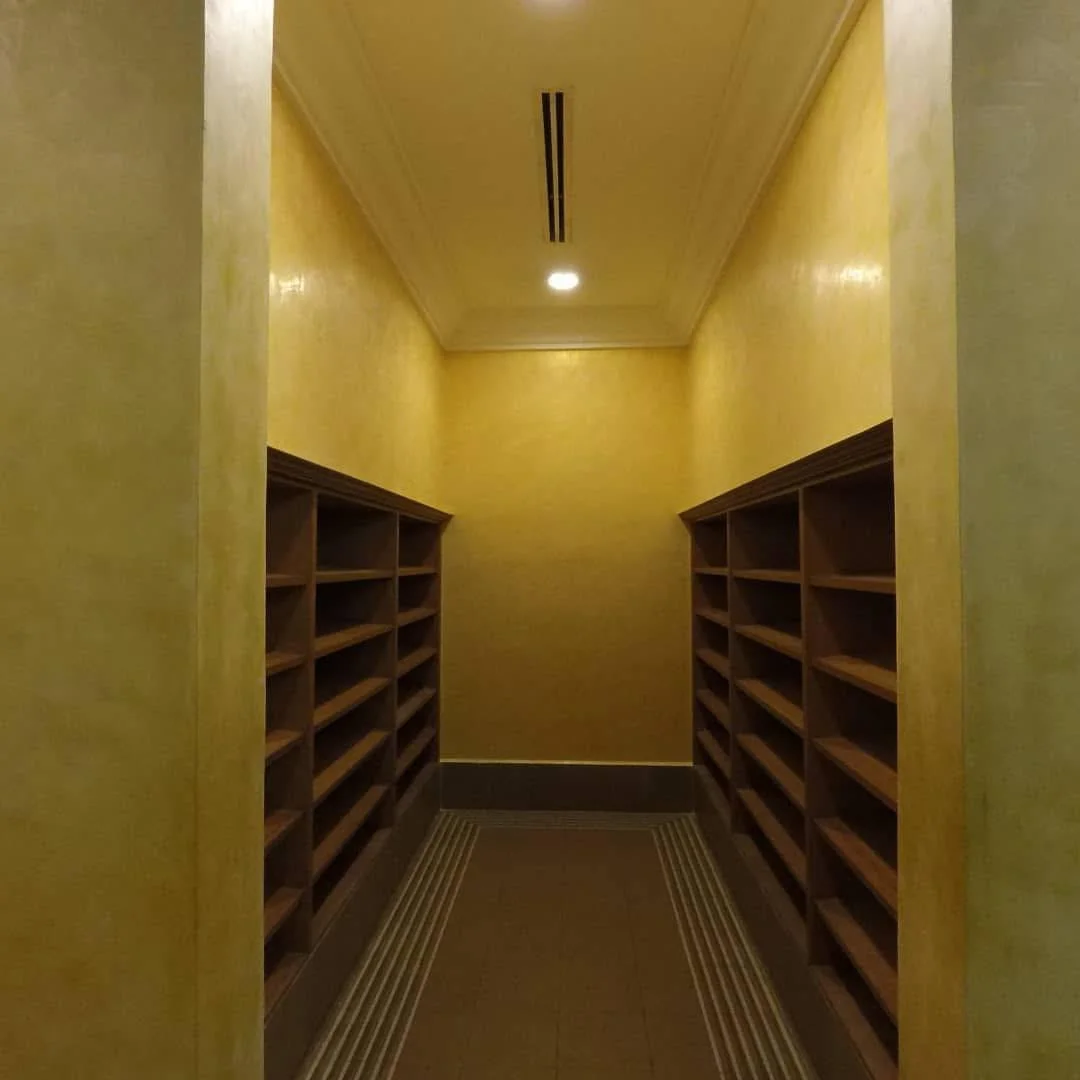
Warm cream and yellow tones connect the interiors shown in these photographs, but their appearance varies between spaces. In the shelving area, overhead lighting reveals differences in tone and reflection across the walls. Elsewhere, pale trim and darker architectural elements create a different visual balance.
When planning a custom finish, review a physical sample in the intended space and under its planned lighting. Check it beside timber, stone, flooring and fabrics. If the room receives daylight, look at the sample at different times as well as under evening lighting. Photographs help communicate a direction; a sample provides a firmer basis for choosing the final appearance.
Give edges and transitions their own attention
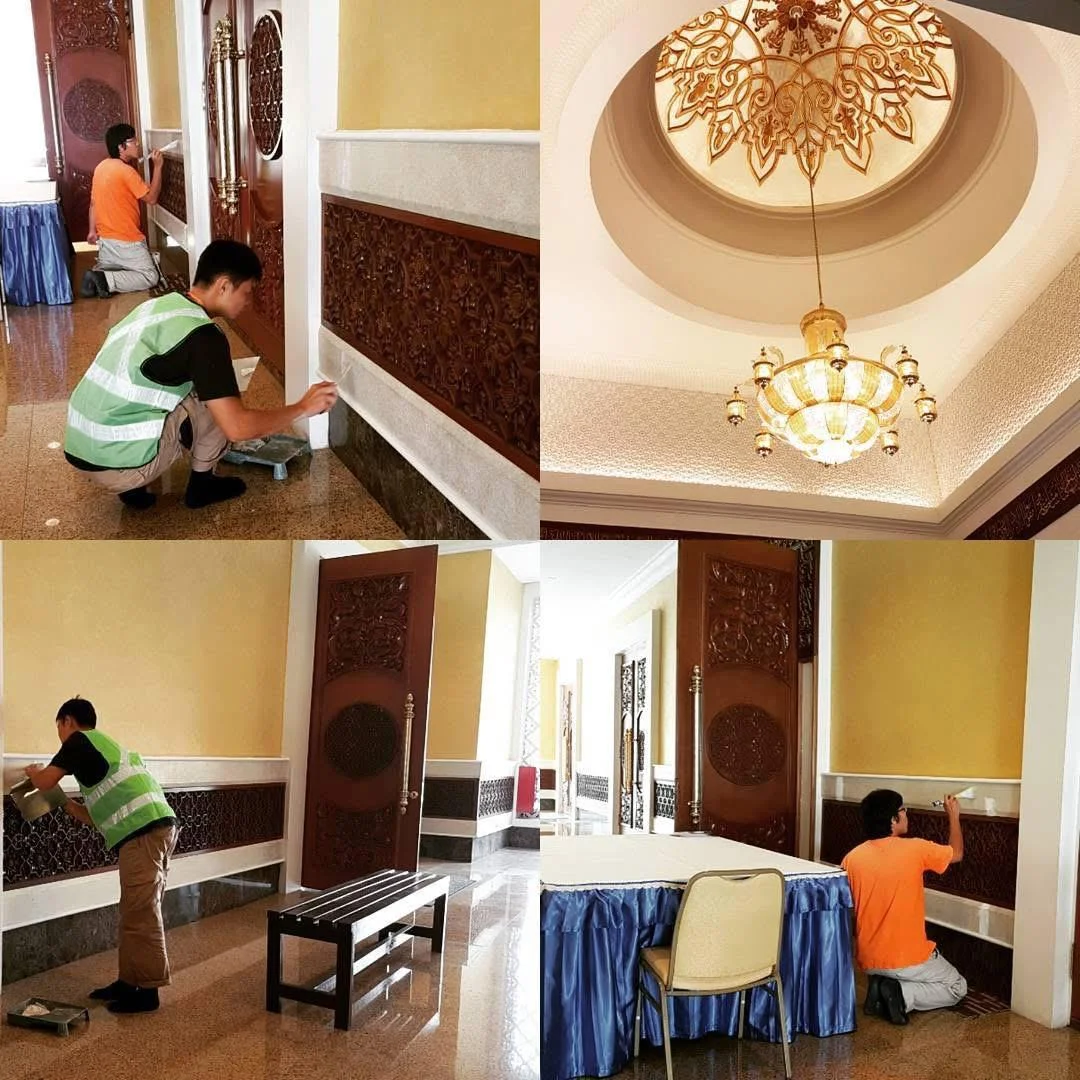
The collage includes applicators working beside carved timber panels and along horizontal wall bands. These close views highlight an easily overlooked part of decorative finishing: the junction between the textured surface and everything around it. The ceiling view also shows textured areas within a setting of circular forms, ornamental detailing and a chandelier.
Door frames, skirting, mouldings and adjoining finishes should be included in the design discussion. Identify where the texture begins and ends, and how corners and narrow sections will be treated. Reviewing these details early helps turn a general design idea into a clear brief for application. For an intricate interior, a sample area that includes an edge or junction can be particularly useful.
Read application photographs as part of the story
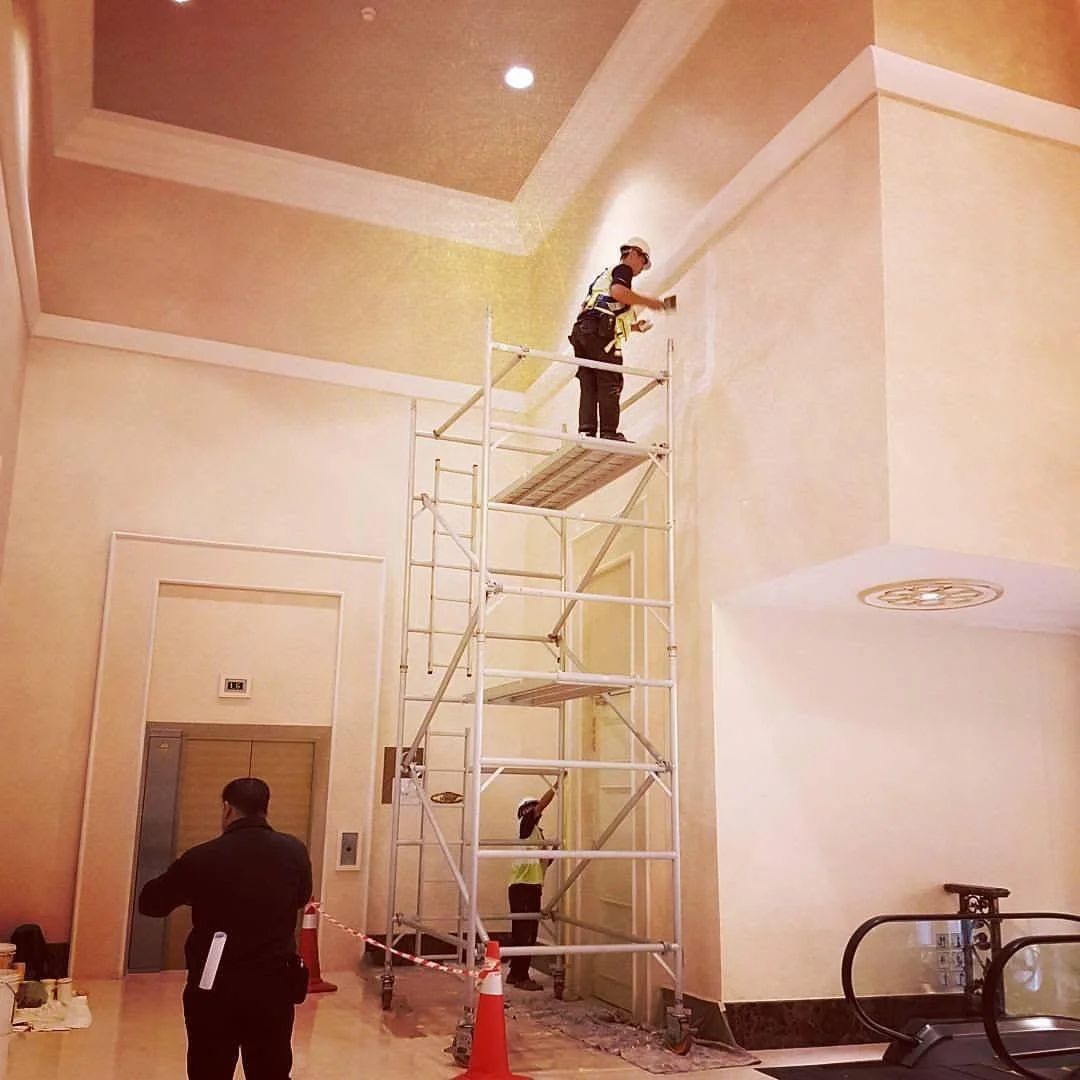
Scaffolding, tools and applicators are visible in several images. These photographs document work in progress at Istana Negara, showing the surfaces at different heights and around existing architectural features.
For anyone planning a similar scope, the images also prompt practical questions. Which walls require access equipment? What neighbouring surfaces need protection? Where should samples be reviewed before the main application begins? These considerations belong alongside colour and texture selection when preparing a project brief.
Bring the design brief together
The Istana Negara photographs illustrate how custom texture can be considered in relation to the whole interior: its scale, lighting, decorative details and adjoining materials. A useful brief combines a visual reference with clear decisions about each of those elements.
For your own space, start with photographs, approximate wall dimensions and the effect you want to achieve. Discuss samples and detailing with MacoAvell before confirming the finish. Explore the MacoAvell finish collection or request samples to begin the conversation.
Frequently asked questions
Can custom texture work with an ornate interior?
Yes. Consider how much visual activity the room already contains. Compare subtler and more pronounced samples beside existing decorative elements, then choose the balance that supports the overall design.
Can I select the exact colour from these photographs?
Use the photographs as inspiration. Lighting, camera settings and screens affect how a colour appears, so confirm your selection with a physical sample in the intended space.
What information should I prepare for a custom-finish discussion?
Bring room photographs, approximate wall dimensions, reference images and details of the surrounding materials and lighting. Identify any corners, mouldings or adjoining surfaces that need particular attention.
Discuss a custom textured finish
Share your project location, wall photographs and preferred finish direction with MacoAvell. The team can discuss the next steps for samples and your application requirements.